Begg x Co is a Scottish luxury brand that specializes in high-quality, handcrafted cashmere scarves, shawls, garments, and soft furnishings. For its debut in China, Begg organized a pop-up showroom in Shanghai timed with China Fashion Week to present the latest Autumn/Winter 2026 collection.
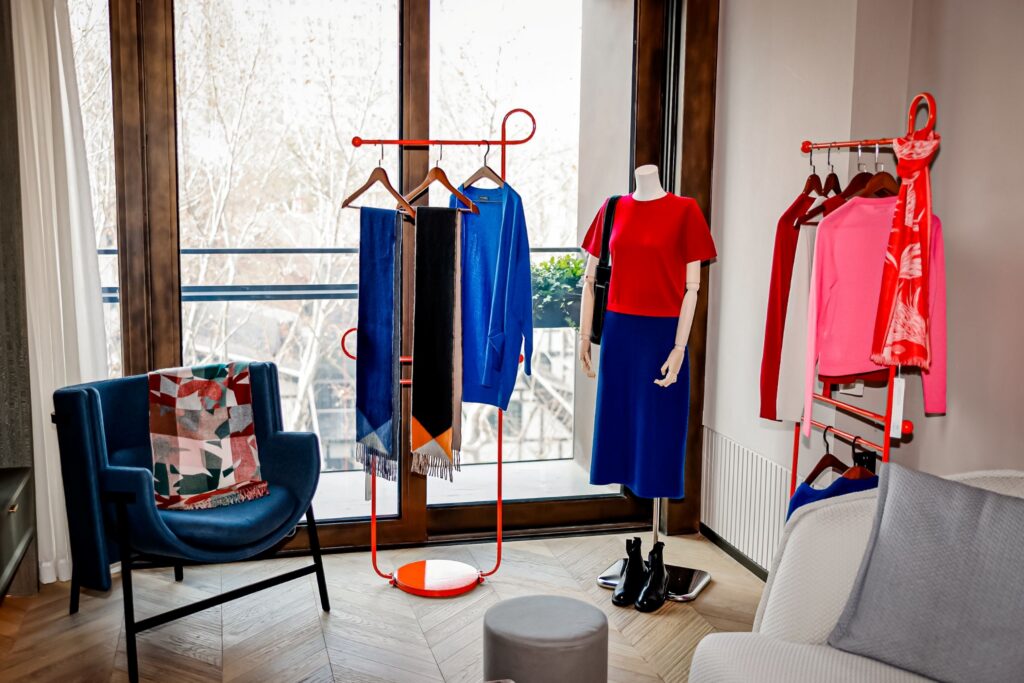
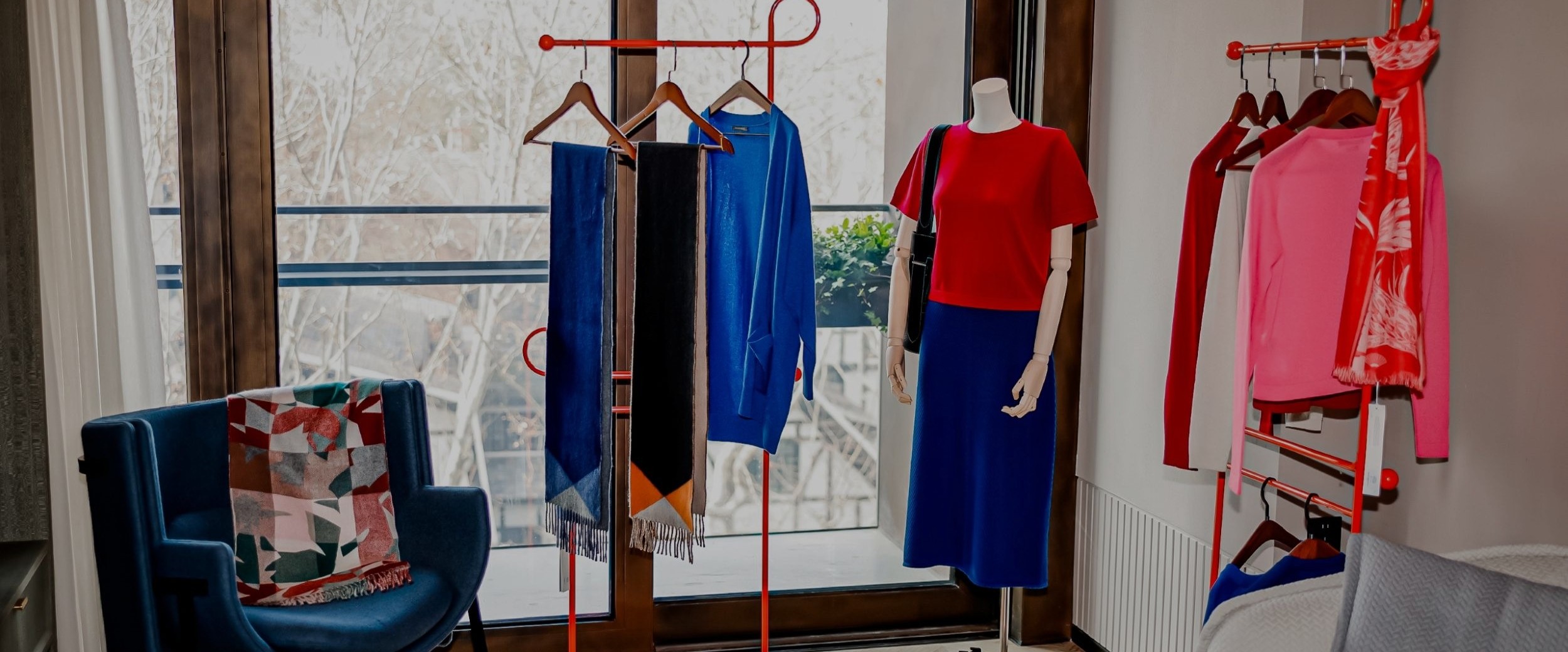
Begg x Co’s colorful Autumn/Winter 2026 Women’s collection, one of the highlights at the brand’s pop-up showroom design in Shanghai; Image Source: Melchers China
5 Star Plus Retail Design was assigned to design, develop, and execute the showroom design, including the narrative, customer flow, storytelling, and product display concept for the Home, Women, and Men collections. The main objectives were to establish the brand in China by creating a strong, memorable impact and to present the brand’s latest collection. It was important to cater to local Chinese consumer behavior and preferences while staying true to the brand image. The team wanted to create a strong lifestyle positioning by making the mood of “Scottishness” and the “Made-in-Scotland” heritage background tangible.
The Begg & Co A/W 2026 pop-up showroom in Shanghai, taking place from March 24 to 27;
Image Source: Melchers China
In addition, the brand was positioned as relevant, fresh, and innovative by emphasizing the color palette and displaying product groups in a mix-and-match style suitable for a fashionable everyday life.
From Space to Story: A Two-Suite Concept
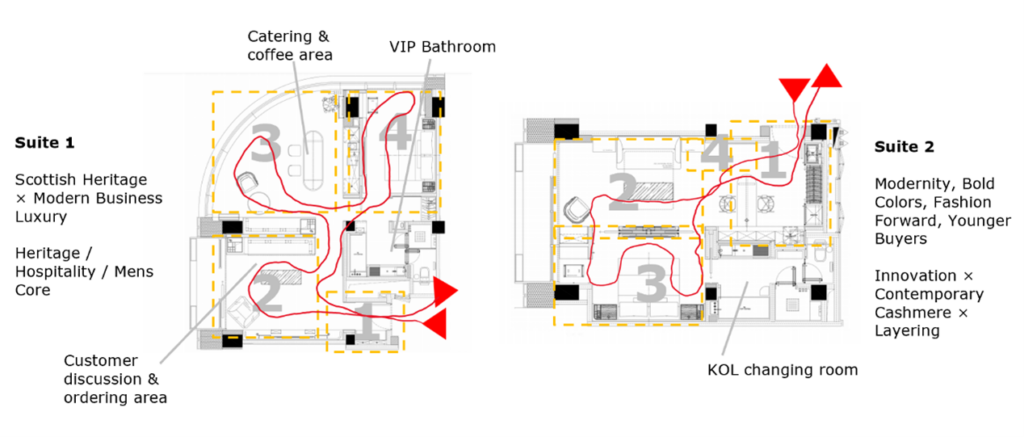
The customer flow in both suites
The showroom project was executed in Shanghai’s prestigious Chao Hotel. Two suites were rented, each designed to showcase different aspects of the experience. Suite 1 established the narrative of Scottish heritage and modern business luxury and displayed Heritage, Hospitality, and Men’s Core products. Suite 2 was about modernity, bold colors, fashion-forward, and younger buyers. In this space, innovative products, contemporary cashmere, layering, and mix-and-match techniques were combined to create an engaging, dynamic atmosphere.
Scarf displays in the “Signature Moment” space; Image Source: 5 Star Plus Retail Design
The Narrative and Brand Experience through the Pop-Up Space
Suite 1: The Heritage Luxury Apartment
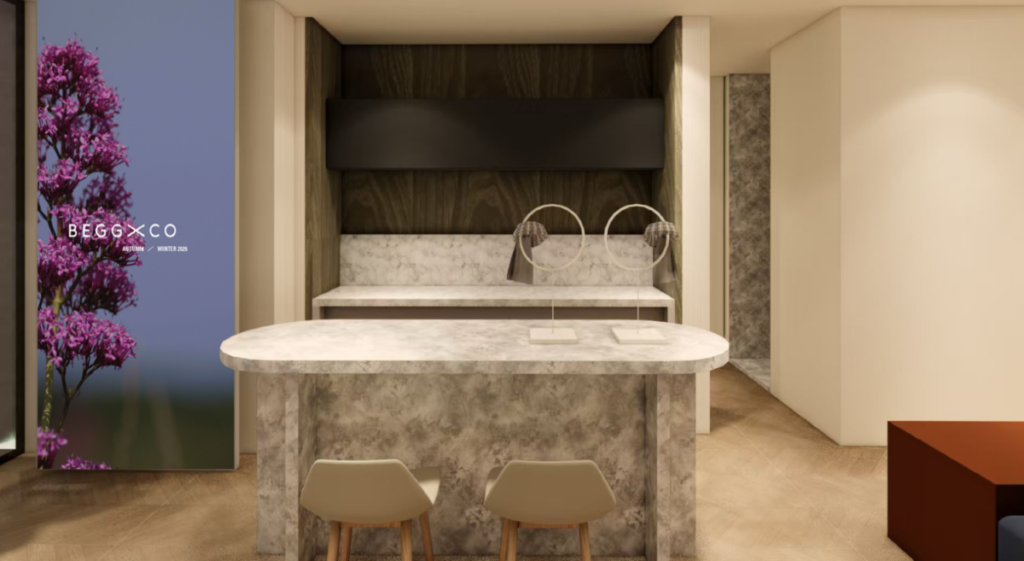
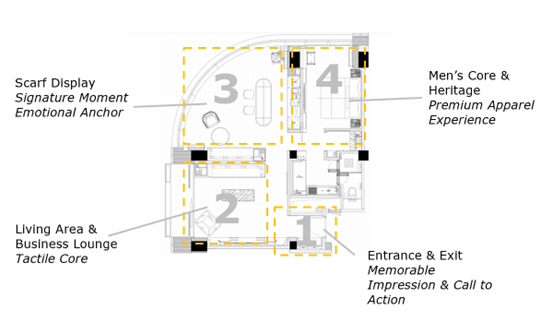
Upon arrival, VIP visitors and media guests were welcomed into an environment that immediately communicated craftsmanship and depth. Generous blankets were draped with intention; scarves were presented vertically, almost sculptural in their clarity. Materials echoed the authenticity of the product itself. The space was designed to exude a sense of calmness.
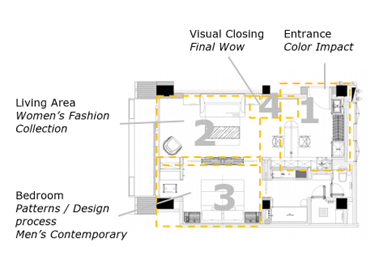
The floor plan of Suite 1, displaying the location of customer experience details and product categories to be displayed
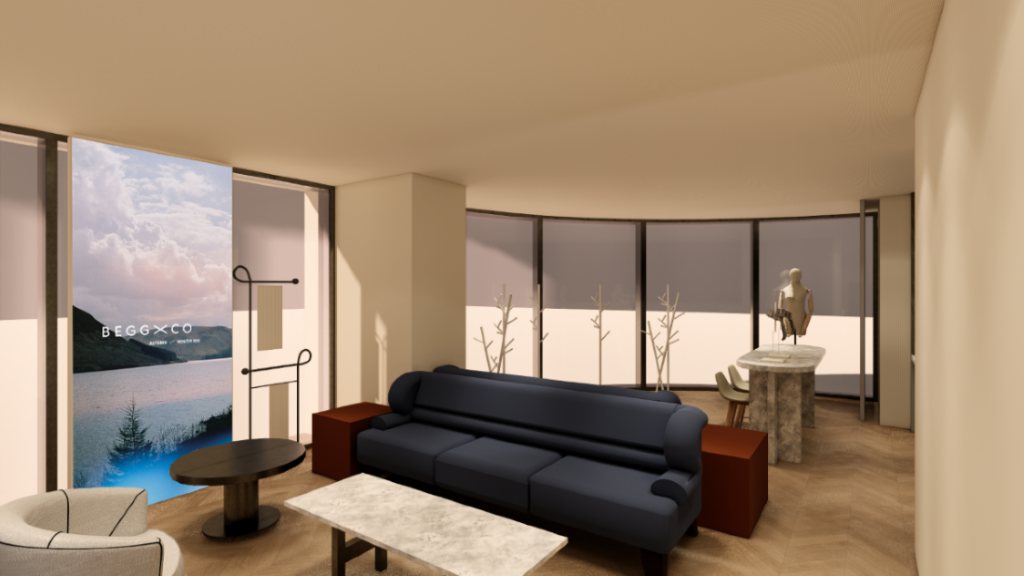
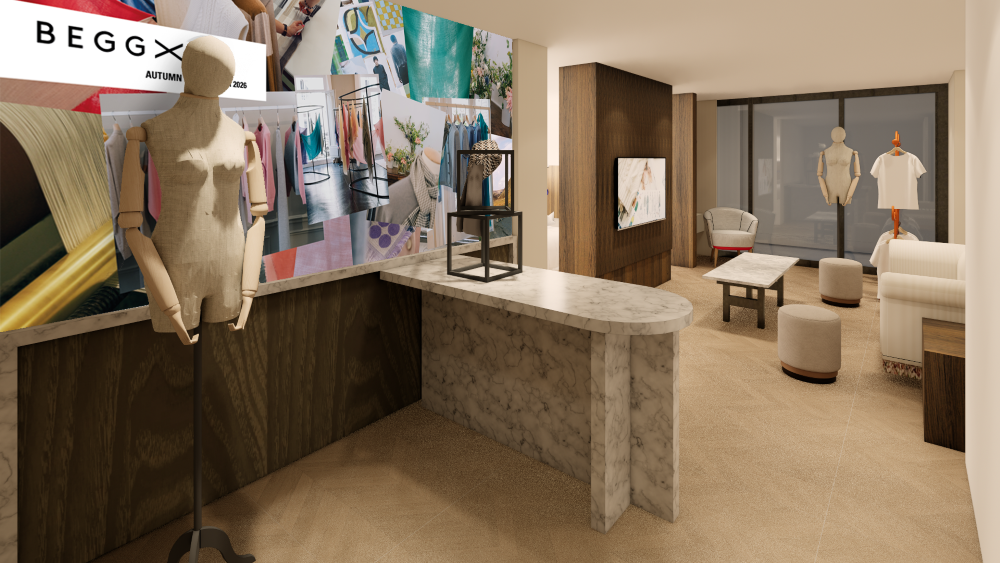
Moving into the living space, the atmosphere became tactile. Throws were layered across sofas and lounge chairs, inviting touch. Cushions created subtle contrasts in tone and texture. Scarves lay within reach on the coffee table, ready to be unfolded, compared, and felt; this is where conversation began.
VIP visitors and buyers sat, touched the product, and imagined it in hospitality spaces, private residences, and curated boutiques. The setting encouraged time, and time encouraged commitment.
The “Tactical Core” and “Signature Moment” areas are hosting Home products and scarves; Image Source: 5 Star Plus Retail Design
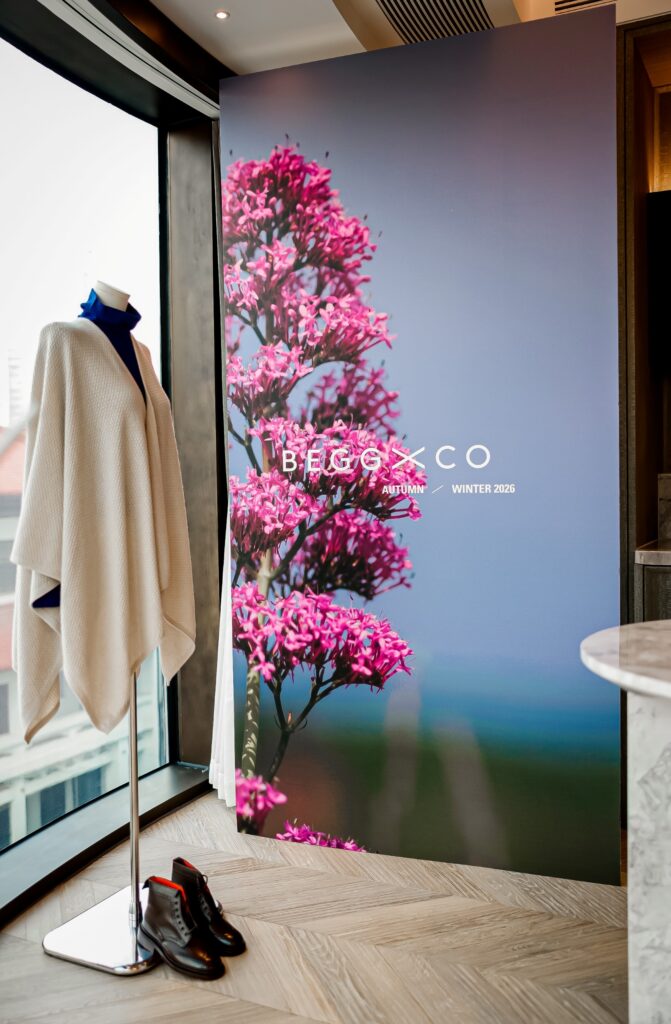
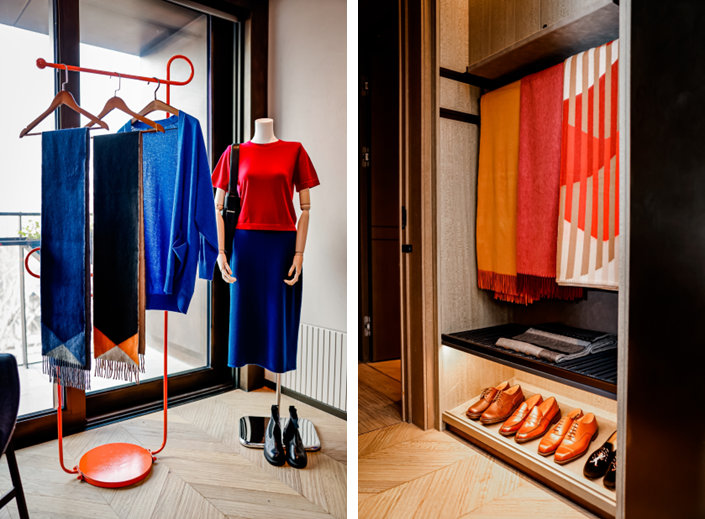
The curved window feature introduced inspiration: a cardigan draped over a mannequin. Scarves were styled with confidence. Lighting enhanced depth and weave, the brand demonstrated styling authority.
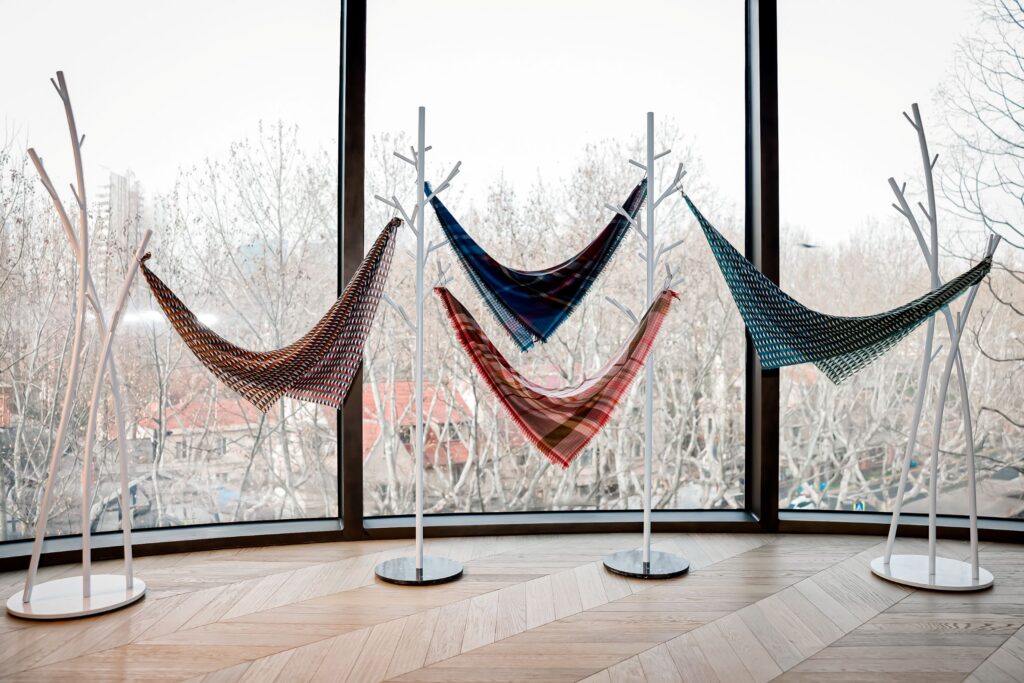
Floating scarves were planned as a signature moment and an emotional anchor for this pop-up display design; Image Source: Melchers China
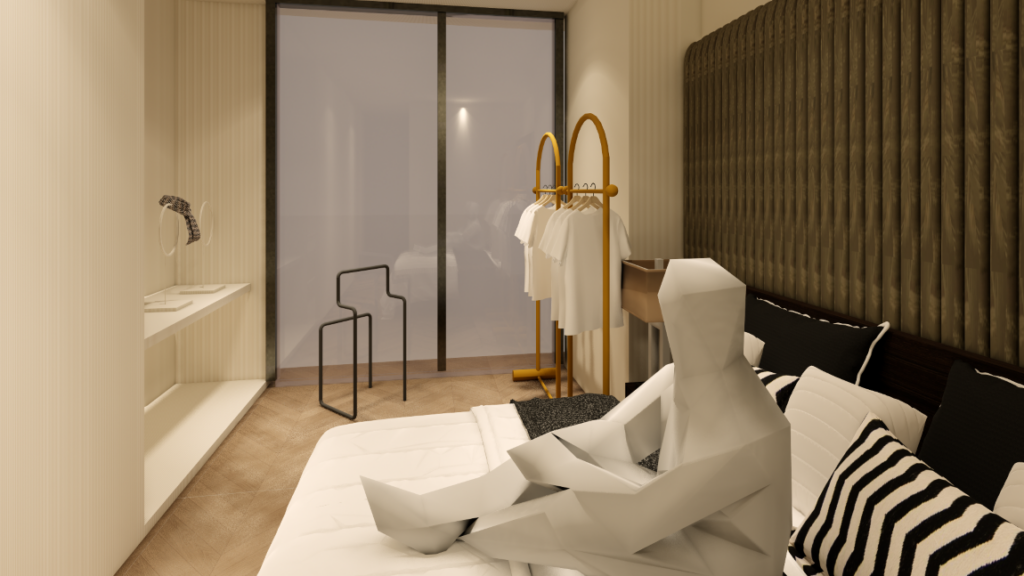
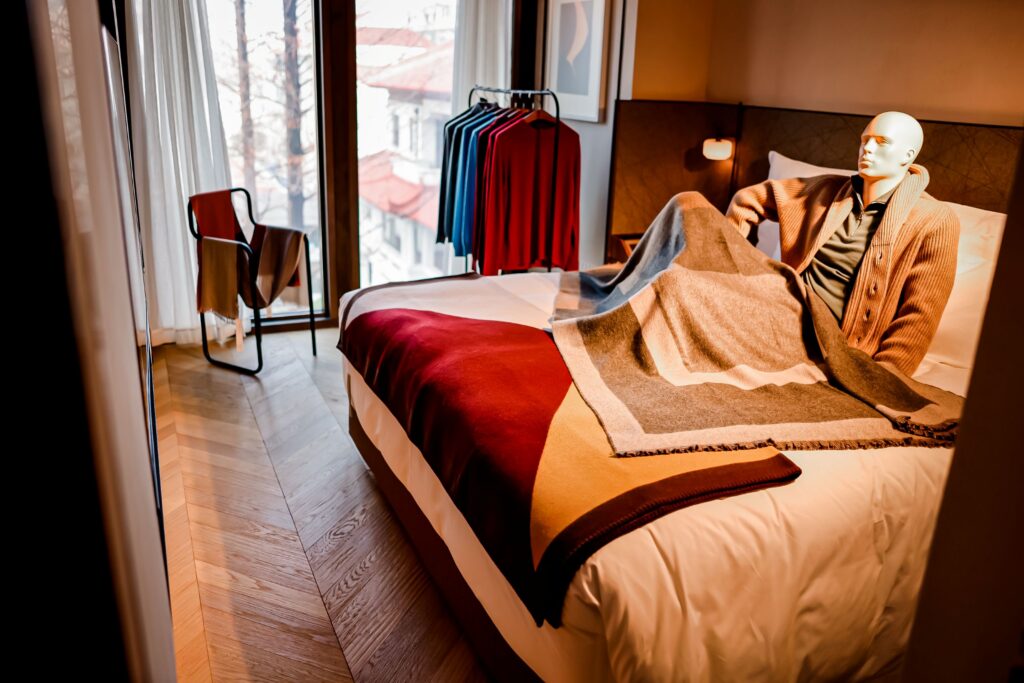
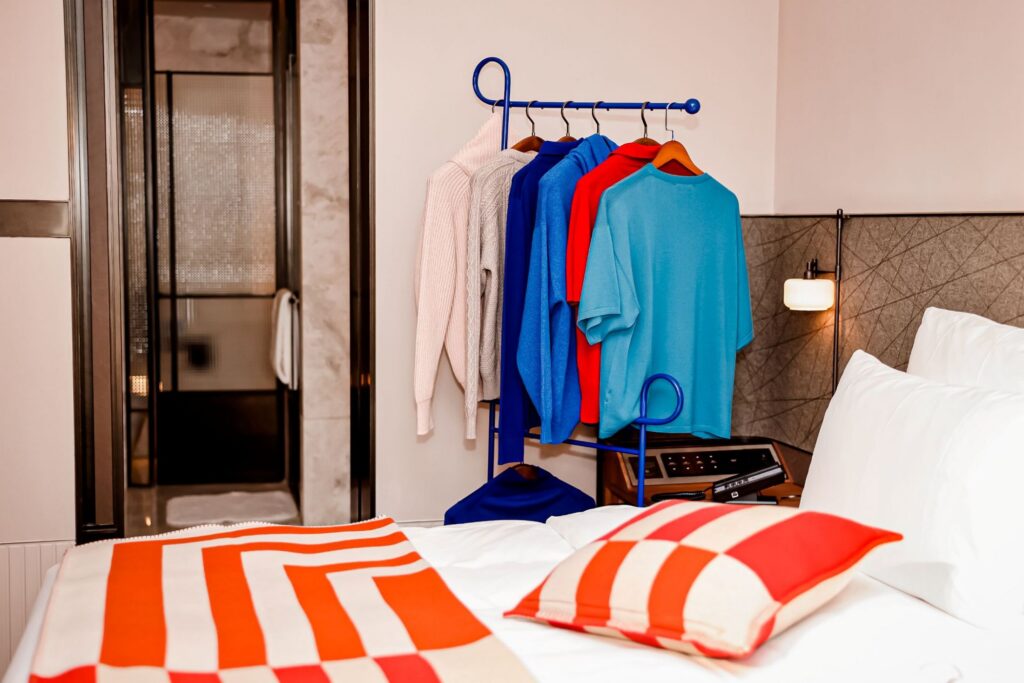
The journey then transitioned into the bedroom, the commercial core. Parallel garment rails presented menswear in logical color gradients. Core styles sat beside seasonal highlights. The bed reinforced cross-category integration between apparel and home.
The space for Men’s Core and Heritage products features clean and minimalist lines; Image Source: 5 Star Plus Retail Design
The suite closed as it began: refined, composed, and luxurious. Suite 1 built trust; it anchored the brand in heritage and permanence.
The Begg x Co A/W 2026 Men’s Collection features warm colors and textures; Image Source: Melchers China
The Contemporary Color Loft
The second suite shifted the tempo. The entry area introduced color with confidence, bolder tones, and sharper contrasts, signalled creative evolution. The atmosphere was lighter, more editorial, and more fashion-forward.
The floor plan of Suite 2, displaying the location of customer experience details and product categories to be displayed; Image Source: 5 Star Plus Retail Design
In the central living space, a styled mannequin presented a complete look, not just individual garments, but a silhouette. Garment rails allowed full outfit composition. Visitors saw how pieces interacted, how color stories developed, and how modern assortments could be constructed.
Color Impact was the themed experience at the entrance of Suite 2; Image Source: 5 Star Plus Retail Design
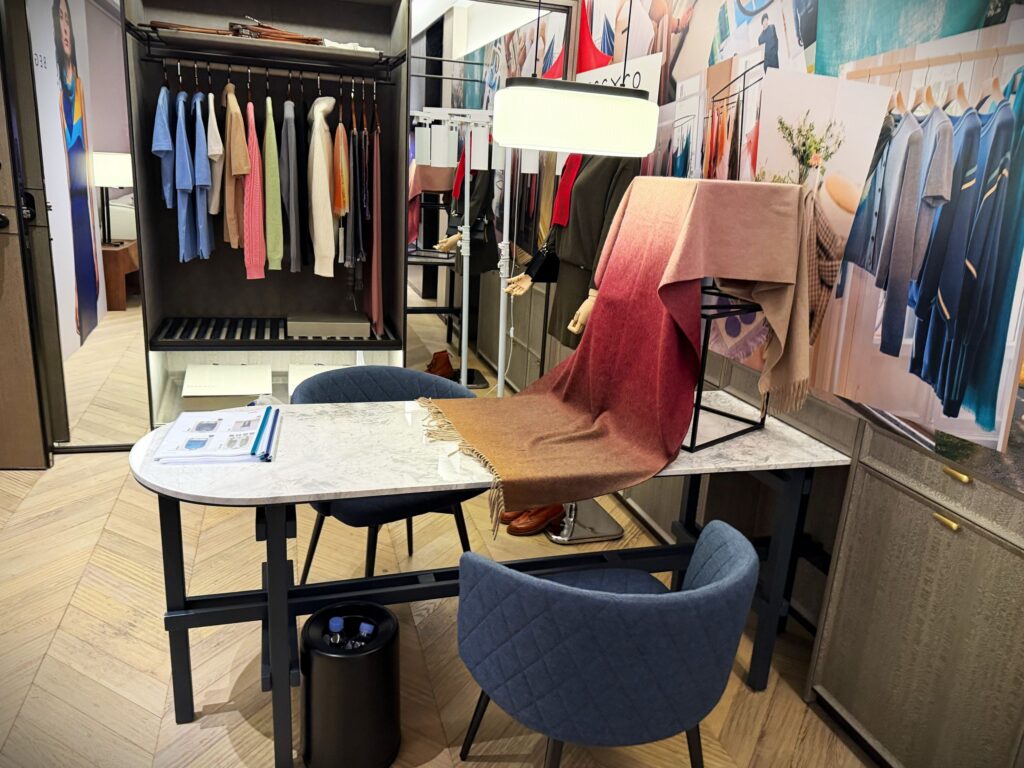
A working table supported live styling and comparison. This was an active environment: dynamic, collaborative, creative. The scarf and pattern table became a demonstration stage, with flat displays that allowed techniques to be shown and constructions to be compared. Visitors gained technical understanding alongside aesthetic appreciation.
Products were layered and grouped, and supported with graphic boards to tell the narrative; Image Source: 5 Star Plus Retail Design
In the contemporary bedroom, menswear appeared sharper and more urban, with rails creating a modern line. The bed again reinforced lifestyle application, grounding fashion within a residential context.
Bold colors are characteristic of Begg x Co’s A/W 2026 collection; Image Source: Melchers China
Suite 2 energized and demonstrated versatility. It expanded the brand’s reach into newer, fashion-conscious markets.
The Visual Merchandising & Design Strategy
For this project, we applied techniques from store design, pop-up store design, and visual display & merchandising. We also developed the graphic design concept based on the brand’s existing visual assets. The visual merchandising & design strategy is one of the most important aspects of a pop-up store design concept and can make or break the project. For the Begg X Co pop-up showroom, the visual display & merchandising strategy was to:
Elevate perceived brand value
Showcase material excellence
Support storytelling
Enable tactile engagement
Encourage curated buying decisions
Avoid visual overload
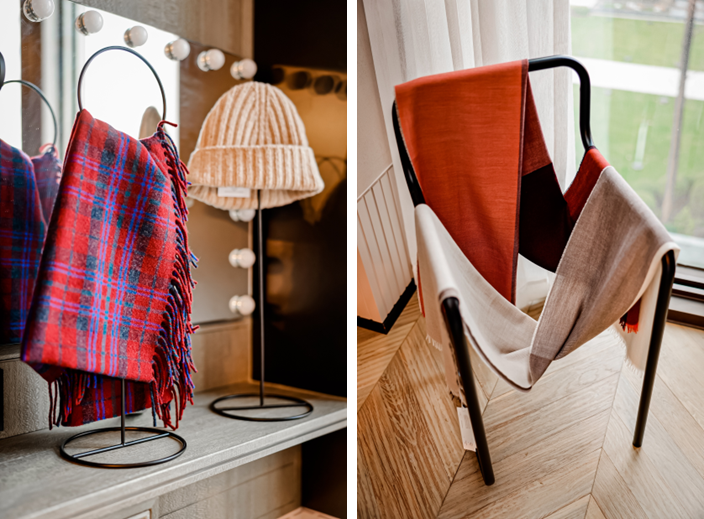
Product displays of a shawl, a beanie and a scarf
Image Source: Melchers China
The movement between the two suites was intentional: Suite 1 was designed to build trust, and Suite 2 to build excitement. Together, they communicated:
Heritage depth
Contemporary relevance
Hospitality capability
Fashion credibility
Commercial structure
Strategic placement of colors and patterns created visual interest within the pop-up store design; Image Source: Melchers China
In case you’d like to learn more about visual display and merchandising, stay tuned: We will launch a new visual display and merchandising training soon! (If you are interested, contact us at academy@5starplusdesign.com
Introducing the Begg x Co Autumn/Winter 2026 Collection
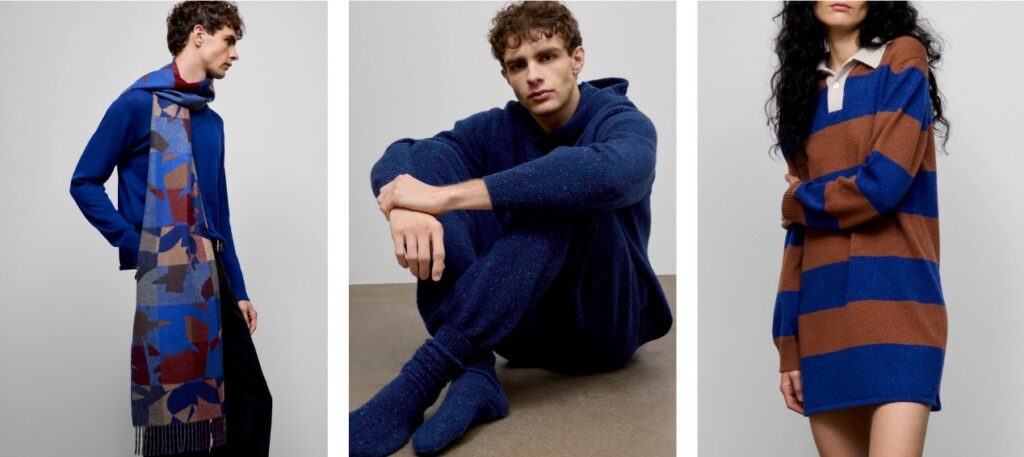
For Autumn/Winter 2026, Begg x Co’s design team took inspiration from St. Andrews, Scotland, where windswept coastlines, academic heritage, and Scottish craftsmanship align. The collection draws on winter walks in the brisk North Sea air along West Sands, in contrast to the quiet warmth of historic libraries.
Begg x Co’s Autumn/Winter collection 2026; Image Source: Melchers China
In today’s retail landscape, a pop-up space is no longer just a temporary display; it is a strategic brand experience. For BEGG x CO’s presence at China Fashion Week AW2026, the objective extended far beyond showcasing products. The goal was to transform a new-to-China brand into a memorable, emotionally engaging experience for a new market.