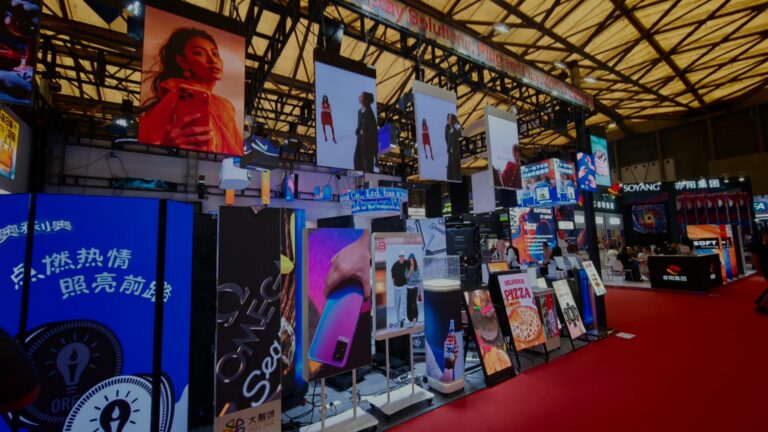
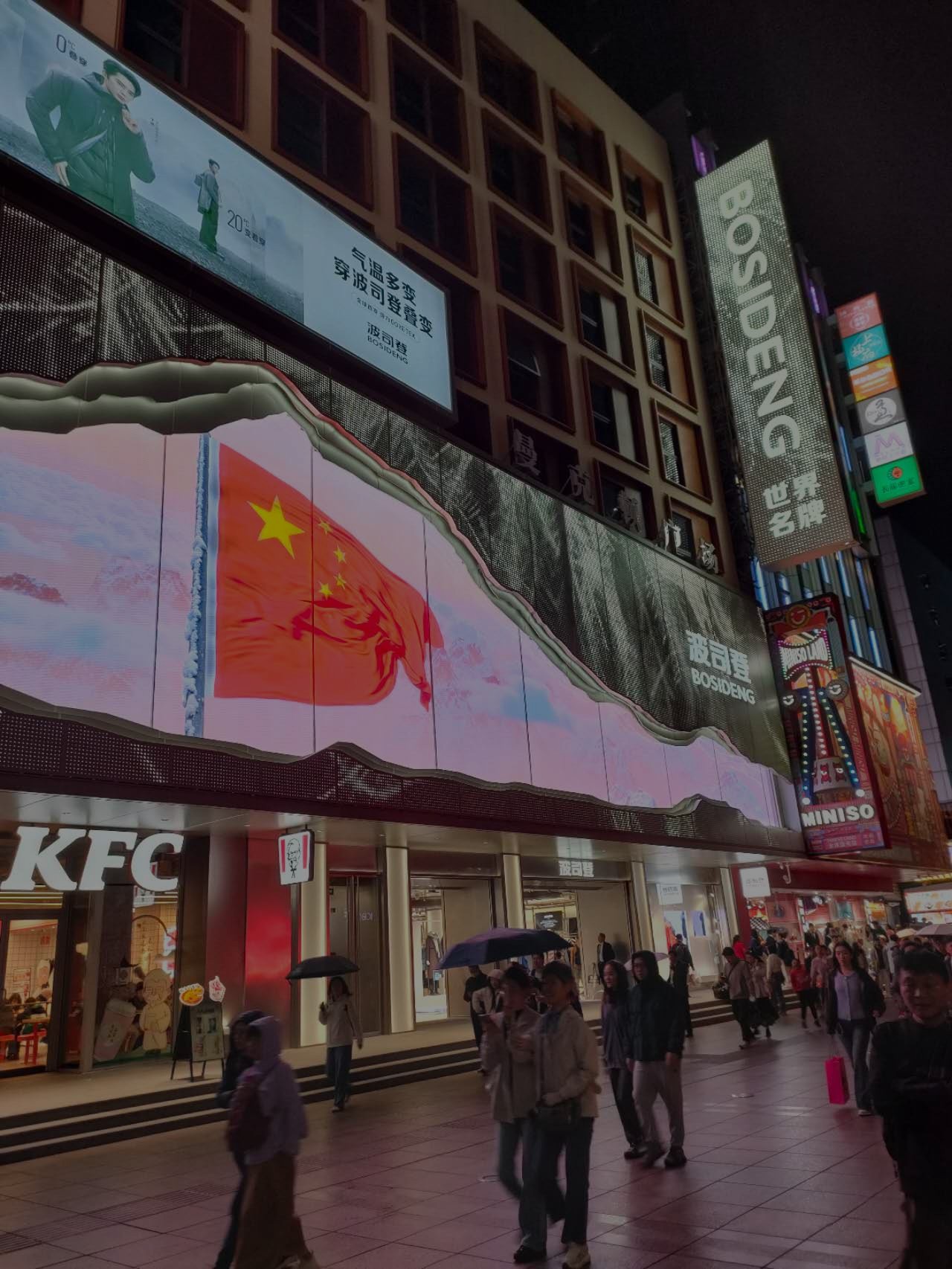
Chinese retail brands have become some of the world’s fastest‑scaling physical retailers because they combine speed, operational discipline, and consumer‑centric innovation at a level unmatched in most Western markets. China’s offline retail sector remains enormous — physical retail still accounts for over 70% of total retail sales (National Bureau of Statistics of China, 2024) — and leading brands expand at a pace that would be impossible in Europe. MINISO, for example, grew from a domestic lifestyle chain into a global retail force with 5,800+ stores worldwide by 2025 and reported USD 2.3 billion in annual revenue (MINISO Annual Report 2024). Beverage chains show similar momentum: Luckin Coffee overtook Starbucks China by reaching 13,000+ stores in early 2025 (Luckin Coffee Q4 2024 Earnings Report), while Heytea scaled from a single shop to 3,000+ outlets in under eight years (Heytea Corporate Data, 2024).
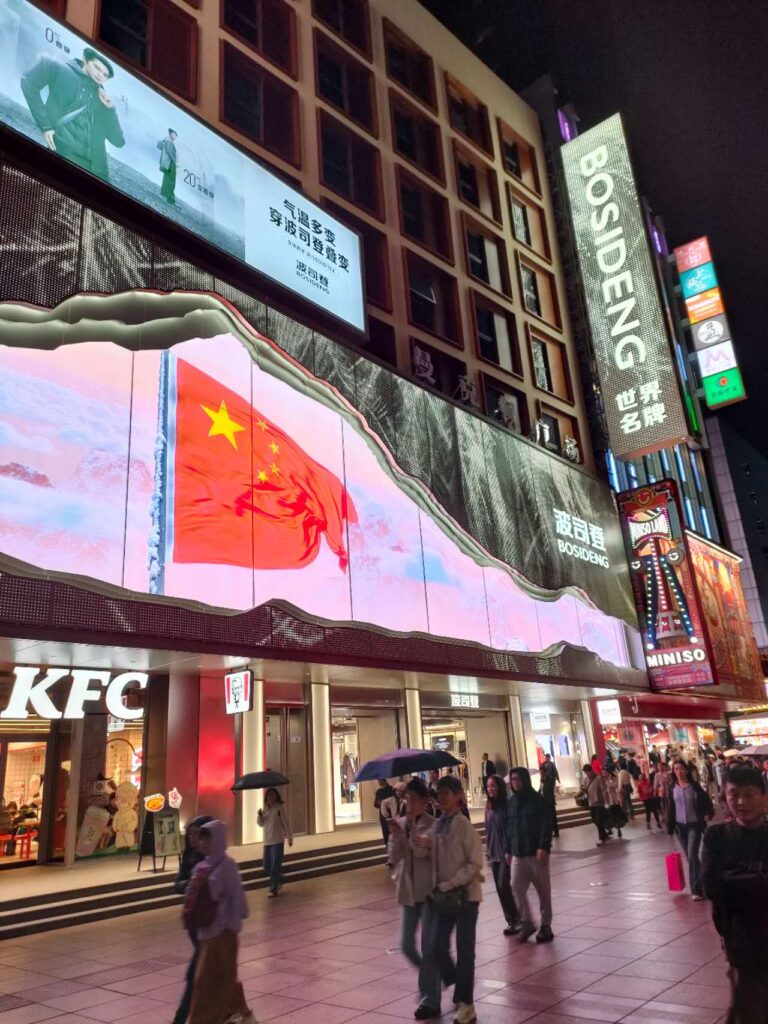
This explosive growth reflects a uniquely dynamic retail ecosystem where brands iterate quickly, landlords support rapid rollouts, and supply chains operate with short lead times and high product refresh frequency. Even traditional categories demonstrate extraordinary expansion: sportswear giant Anta now operates 10,000+ stores across China (Anta Group Annual Report 2024), and beauty brand Perfect Diary opened 200 stores in three years while becoming one of China’s top cosmetics players (Bloomberg, 2023; McKinsey China Consumer Report 2024). Together, these examples illustrate why Chinese retail brands are redefining global benchmarks for physical retail: they scale faster, innovate faster, and connect more deeply with consumers than almost any competitors worldwide.
Understanding what makes these brands successful will help retailers develop a better brand strategy and retail design approach. Here are our picks of the top 10 key lessons that can be observed with successful Chinese retail brands:
1. Bold Vision and Long-Term Strategy
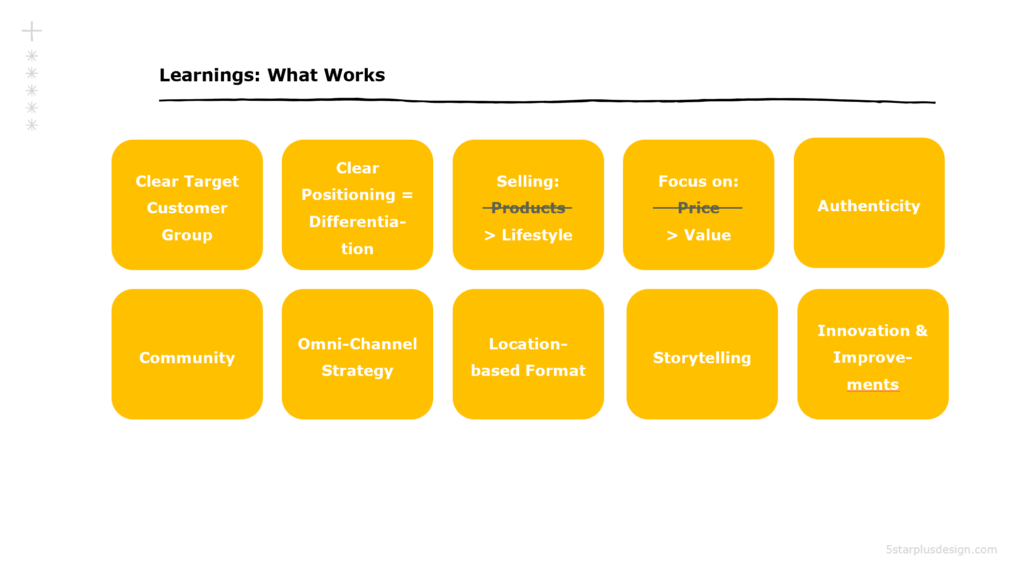
Chinese retail brands tend to have a bold vision that impresses employees, stakeholders, and competitors alike. Based on the vision, brands develop a clear positioning that differentiates them from competitors, and define their target customer group. This leads to brands that are clearly distinguishable in purpose and style from one another, and where customers go willingly to look for new products.
2. Authenticity:
A clear positioning also directly leads to more authenticity. What does a brand stand for and what not? What is the brand personality? Only with a clear positioning, brands can communicate clearly and consistently through all channels and touchpoints. Customers do feel a brand’s genuineness and effort.
3. Meticulous Execution
Visions are then developed into multi-year strategies and broken down into years, quarters, months, and weeks. To-dos and deliverables are defined and followed up on. Additionally, B-strategies are defined in case the prior plan did not deliver the aspired results. Planning and proper follow-up are the key here.
4. Selling of a Lifestyle, not Products
With the exception of base products required for daily living, today’s consumers don’t purchase products for them to fulfill functional requirements; they expect products to fulfill emotional and psychological requirements. In short, they look for a lifestyle and a brand that is a leader in promoting that lifestyle. Retailers, therefore, need to think about how to redesign their stores, product displays, and communications to sell a lifestyle.
5. Location-based Formats
Most successful Chinese retailers have created several different store concepts with varying product offerings, store sizes, and store designs. The store formats are addressed to different target customer groups and their needs. The factor that decides which store format will open where is the specific location and the existing customer background. The decision for one store concept or the other needs to be analyzed and data-driven.
6. Focus on the Creation of Value, not a Product
Brands need to understand what “value” means to their target customer group. For some consumers, additional value is derived from sustainable approaches; others, for example, appreciate state-of-the-art design. The value of a product should never come from its functions alone, because if it does, the retailer will have to compete on price with other competitors in the market.
The perceived value is usually also intrinsically linked to the brand positioning.
7. Community
With a strong positioning and by selling a lifestyle, brands can go further and create a community. Chinese brands excel particularly in digital consumer engagement and in connecting digital and physical experiences. For example, Heytea has recently created Heytea lab, consisting of four experiential spaces, displaying hand-written tea manuscripts and experimenting with different locally-driven recipes. Community and loyalty are driven by mini‑programs, limited editions, KOL collaborations, and omnichannel marketing.
8. Omni-channel Strategy
Chinese retail brands are masters of omni-channel strategy. When looking at Chinese retailers, each channel, no matter whether physical or digital, usually has a clearly defined strategy, and all channels are complementary to each other. This means, for example, that one channel might be used to attract a different target customer group and to drive traffic to another. Different channels of the same company should not compete with each other by offering the same products to the same customer group.
9. Continuous Innovation & Improvements
The Chinese market operates at high speed. In an environment with a market size and number of competitors that is a multiple of other markets in the West, consumers have many available options for satisfying their purchase needs. This forces retail brands to constantly evaluate and question their status quo and keep improving and innovating. Additionally, especially younger generations of consumers have come to expect constant innovation and require purchasing the “best” or “latest” on the market.
10. Pragmatism & Attitude Towards Change
Finally, in Asia, change is described as the normal state. And stillness is the exception. Therefore, Asian and particularly Chinese companies have embraced constant change in their planning and operations. Change is seen as positive and to bring opportunities. With a very unemotional attitude, changes in the market and geopolitical environment are evaluated with a constant search for the exploration of possible opportunities and benefits for the business.
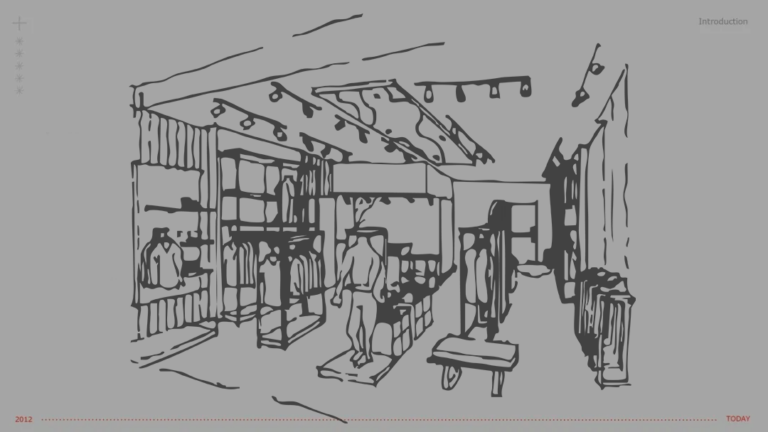
What does retail design have to do with all of that? Professional retail designers analyze and help optimize the retail strategy and marketing objectives, and then create physical store designs that optimize all of the points listed earlier. This is possible because retail design is a multi-disciplinary profession; a retail design project team is usually comprised of architects, interior designers, store and marketing consultants, graphic designers, and technical drafters.
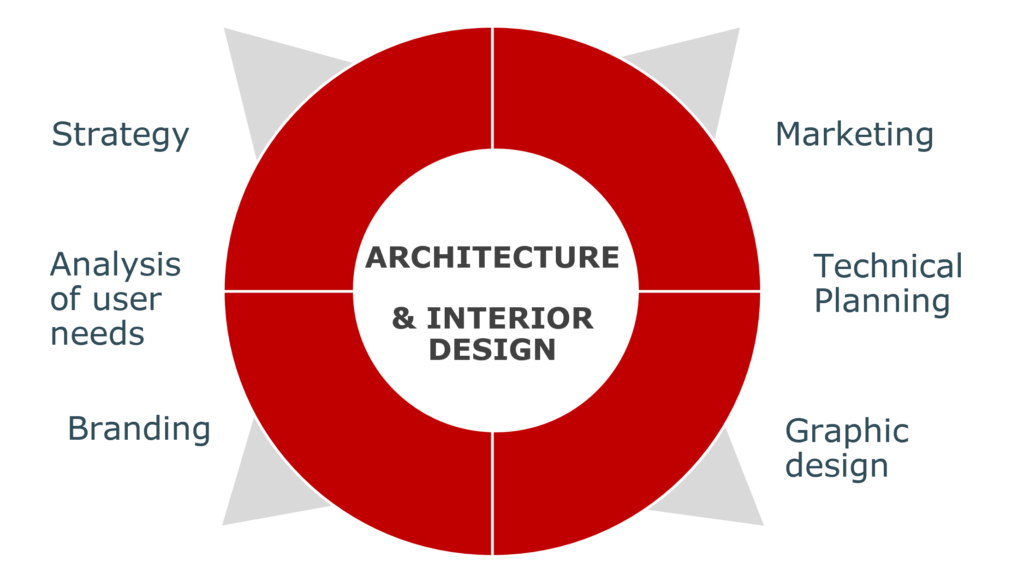
In this way, the team develops stores that help brands be authentic and sell more.